
CIRT Website Redesign
Software Engineering for Academic Research & Discovery
The Criminology Institute for Research and Training (CIRT) faced a significant visibility gap: despite producing high-quality research, their work, faculty achievements, and student publications were largely invisible to the public. As the Front-End Design Lead in a Software Engineering context, I collaborated with a development team to build a digital home that organizes and highlights CIRT’s contributions to the field of criminology.
Project Specifications
Role: Front-End Designer & Client Liaison
Context: CSC 230: Software Design and Engineering | University of Tampa
Tech Stack: Canva (Prototyping), HTML/CSS (Front-End Development), MacBook Air
Key Deliverables: High-Fidelity Website Layout, Functional Research Repository
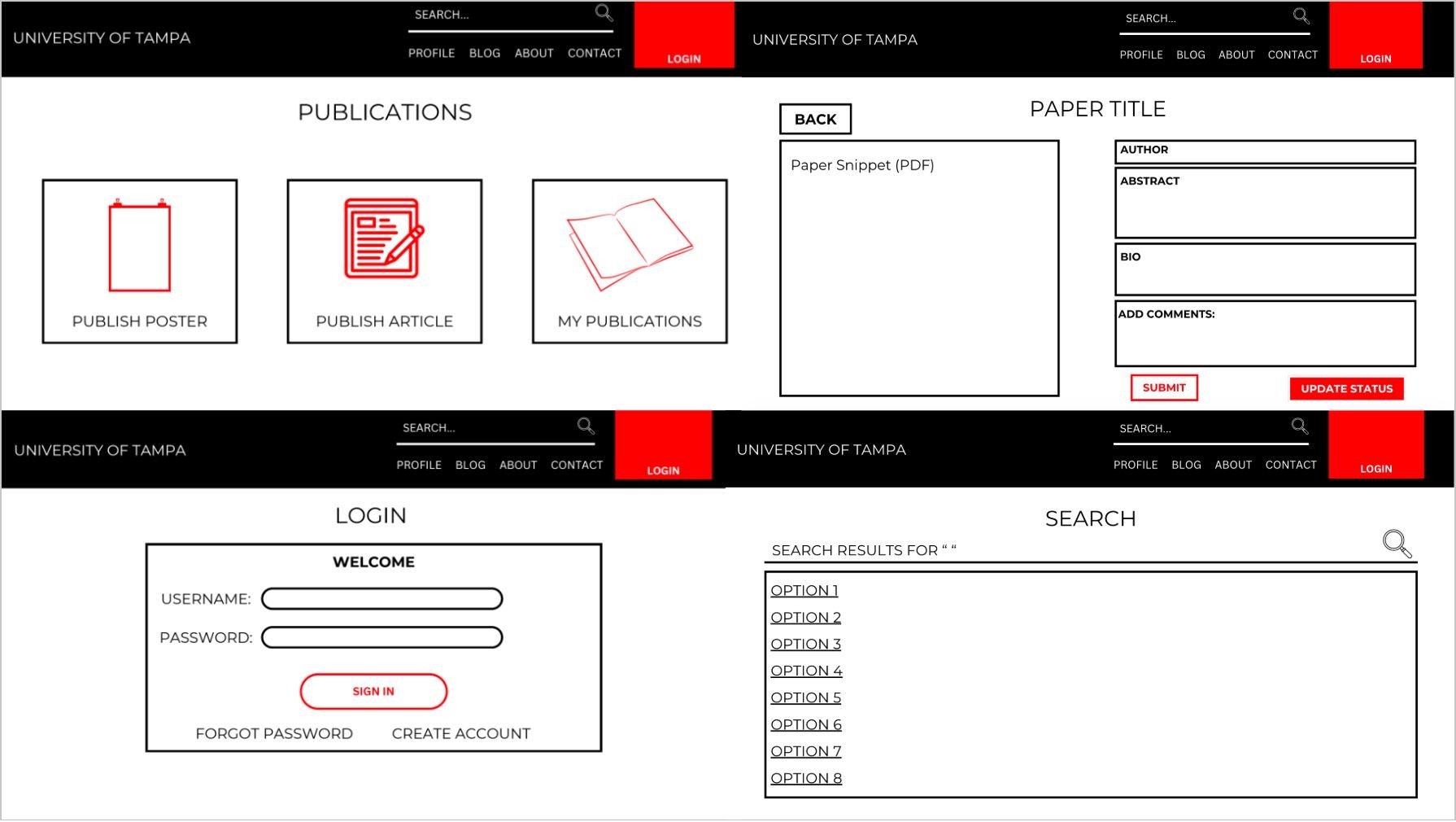
The Challenge: Making Research Accessible
The primary problem was that CIRT’s work, ranging from published posters to faculty papers, was not being seen. The project required a solution that not only housed this data but also presented it intuitively for students, professors, and external researchers.
Key UI/UX Objectives:
Information Architecture: Organize a massive library of papers and posters into a searchable, logical structure.
Stakeholder Management: Translate the specific preferences of the Criminology faculty into technical requirements for the back-end team.
Professional Credibility: Create a visual design that reflects the academic prestige of the institute while remaining modern and accessible.
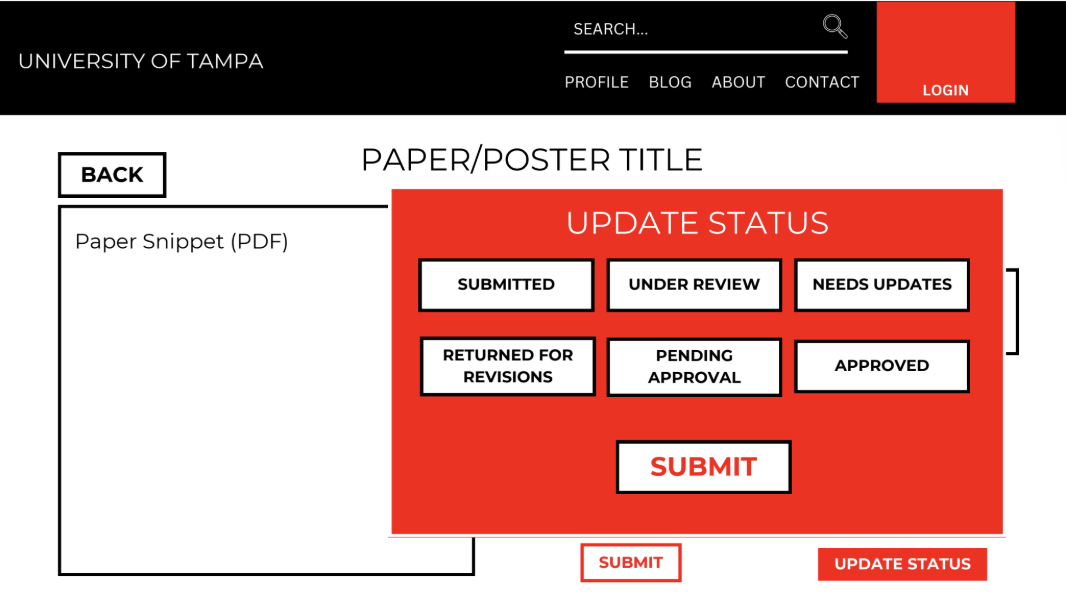
The Process: Bridging Design and Engineering
This project allowed me to act as the bridge between the users (CIRT professors) and the builders (back-end developers):
Requirement Gathering: I met directly with the CIRT department to identify their pain points and determine exactly how they wanted their research to be displayed.
Front-End Prototyping: Using Canva, I designed a comprehensive layout that focused on clean navigation and a “research-first” hierarchy.
Cross-Team Collaboration: I acted as the lead designer to ensure the back-end team had a clear roadmap for the code, ensuring the final product stayed true to the user-centered design goals.
Final Polish: I focused on the front-end aesthetics to ensure the site was engaging, allowing the program's work to stand out.
Reflection: What I Learned
This project was a significant highlight of my undergrad experience because it brought together everything I’ve learned in Computer Science and New Media. Working on the front-end allowed me to see how important it is for designers and developers to talk to each other. I learned how to take a real-world problem, like a department’s lack of visibility, and use software design to solve it. It was incredibly rewarding to create something that will actually help people discover the outstanding research being done at the university.
Looking Ahead: UX for Open Science
Moving forward, I’m interested in how we can make academic websites even more interactive. I’d love to explore adding live data visualizations that show the impact of CIRT’s research in real-time. I also want to make sure these research hubs are fully responsive so students can easily read papers on their phones. This project showed me that my passion lies in creating tools that make complex information easy for anyone to understand and use.