
Physical Computing and Interactive System Logic
Defuse The Bomb is an interactive hardware-software hybrid game that challenges players to solve a series of puzzles under pressure. By integrating Python logic with physical components, my partner and I created a high-stakes Escape Room experience where users must decode secret instructions to disable a countdown timer before it reaches zero.
Project Specifications
Role: Lead Game Logic Developer
Context: CSC 102: The Science of Computing II | University of Tampa
Tech Stack: Python, Thonny, MacBook Air
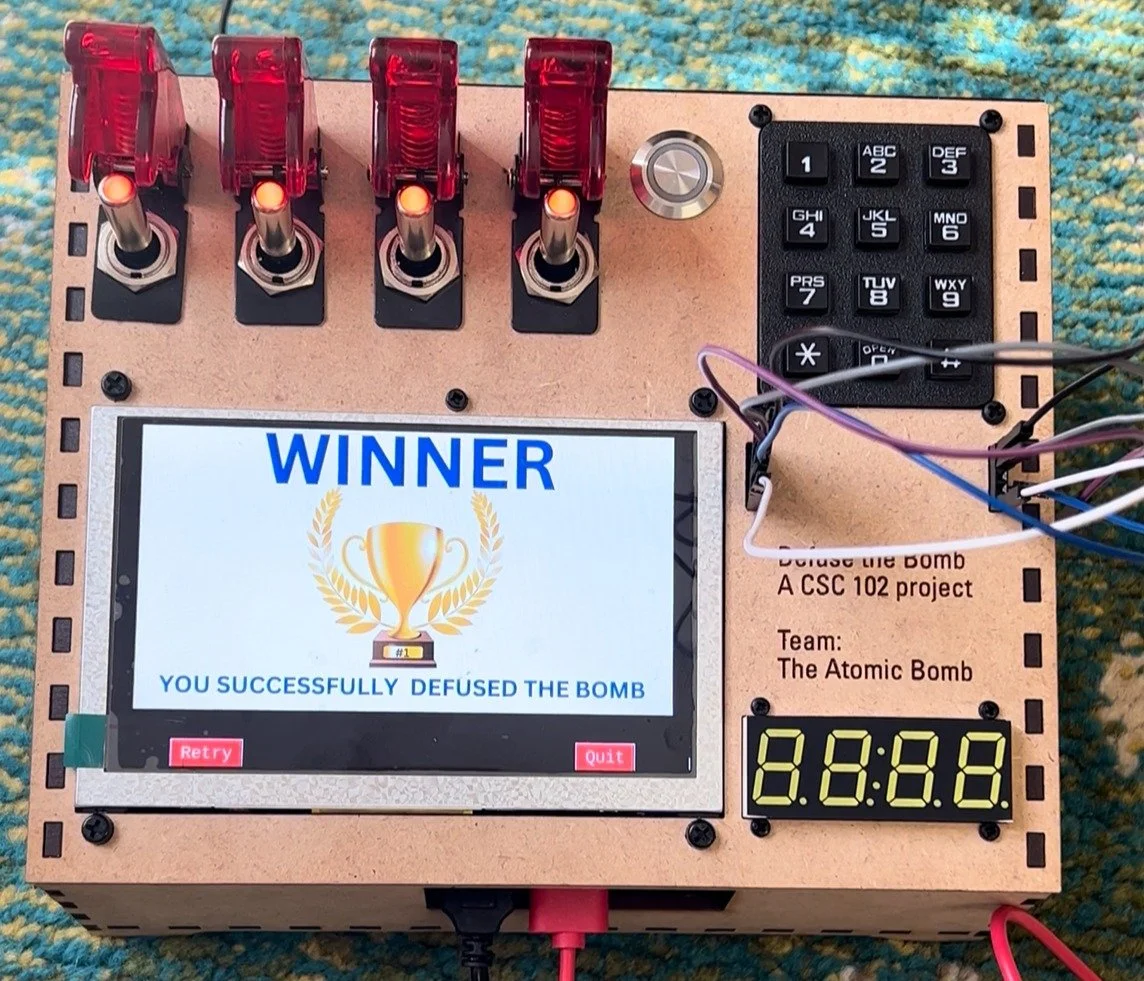
Hardware Integration: Custom-built Bomb Box with physical buttons, toggles, and wiring.
Defuse The Bomb
The Vision: Tactical Interaction
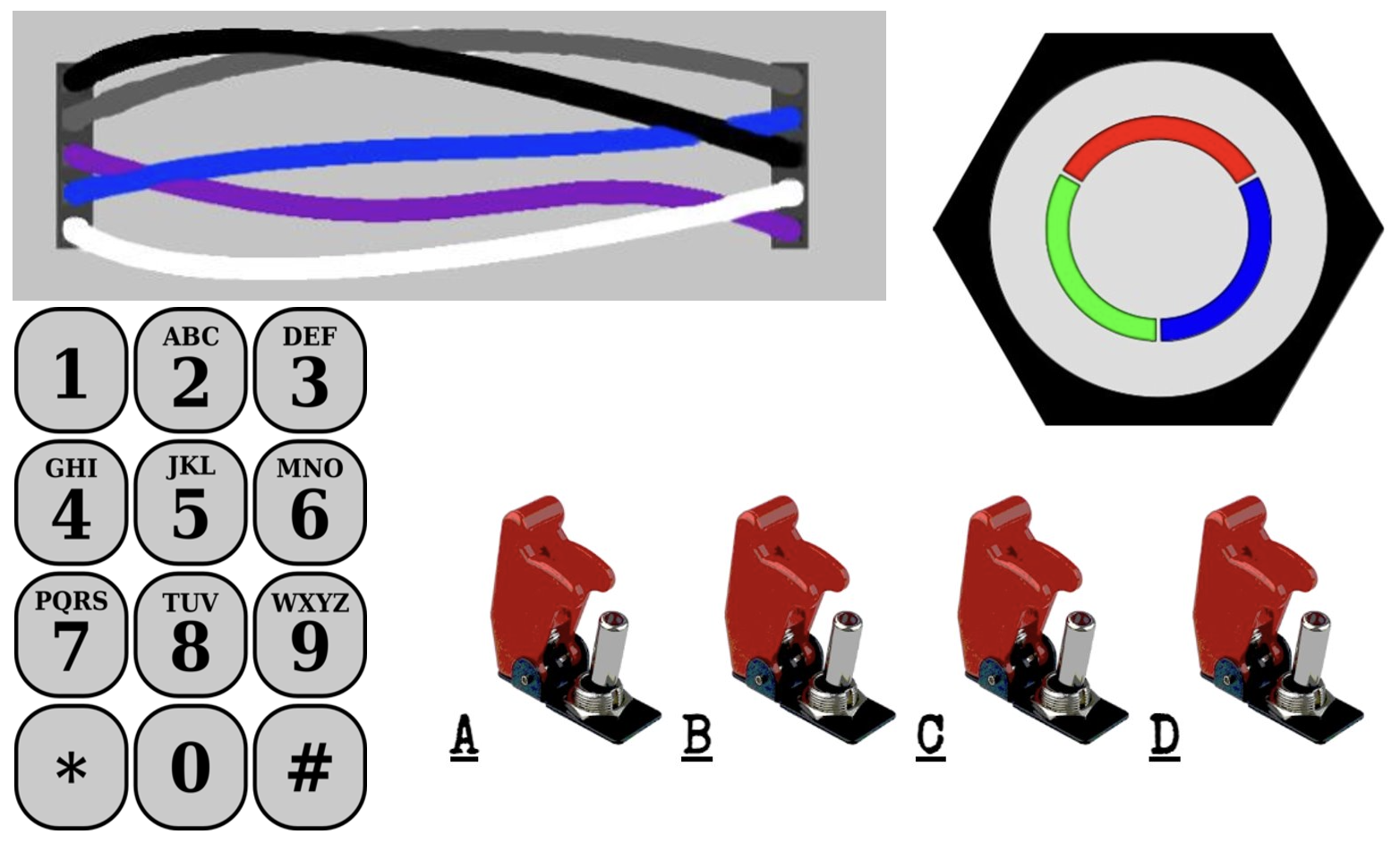
The goal was to create a tactile experience that bridged the gap between screen-based code and physical feedback. We designed a Formulary-style instruction pamphlet that players had to read in real time to solve secret codes, using physical objects to solve digital problems.
Key Design Objectives:
Logic-Driven Puzzles: Programming unique behaviors for various inputs, including multi-step keypad sequences and wire-cutting logic.
Multisensory Feedback: Incorporating a library of sound effects, ranging from satisfying clicks for successful steps to an explosion sound for failure, to heighten the player’s emotional state.
UI Graphics: Designing custom on-screen graphics to display the countdown and current bomb status, ensuring visibility of system status.
The Process: Building The System
This project was a deep dive into the Science of Computing, requiring a blend of software engineering and physical construction:
Code Personalization: Starting with a basic framework, I expanded the Python code to handle complex conditional statements for our custom buttons and toggles.
Audio-Visual Integration: I mapped specific audio triggers to game states (Win/Loss/Progress), ensuring that the sound and graphics updated instantly as the hardware was manipulated and the user reached or achieved a specific status.
Physical Prototype: As a class, we built a custom Bomb Box to house the hardware, creating a realistic interface that challenged the user’s logic.
Instructional Design: I co-authored the secret code/instruction pamphlet, which served as the game's documentation, forcing players to process complex information under time constraints.
Reflection: What I Learned
This was one of my favorite projects because it took code off the screen and put it into the real world. I learned how to handle edge cases, such as what happens when a player flips the wrong toggle or enters the code too fast. It was challenging to sync the hardware inputs with the Python logic, but seeing someone actually play the game and get excited or stressed by the sounds and countdown made me realize how powerful good interaction design can be.
Looking Ahead: The Future of Tangible Interfaces
After building this, I'm really interested in how Tangible User Interfaces (TUIs) can be used in education and training. In my Honors Thesis research, I am looking at how eye-tracking can tell us where people focus when they are stressed, and I would be interested in applying that to games like this to see how people find certain elements, in this case, secret codes, under pressure. In the future, I want to explore how we can use AI to make these games smarter, so the bomb could actually learn from the player's behavior and adapt the puzzles in real time.