
Narrative Multiplicity and Seamless Digital Compositing
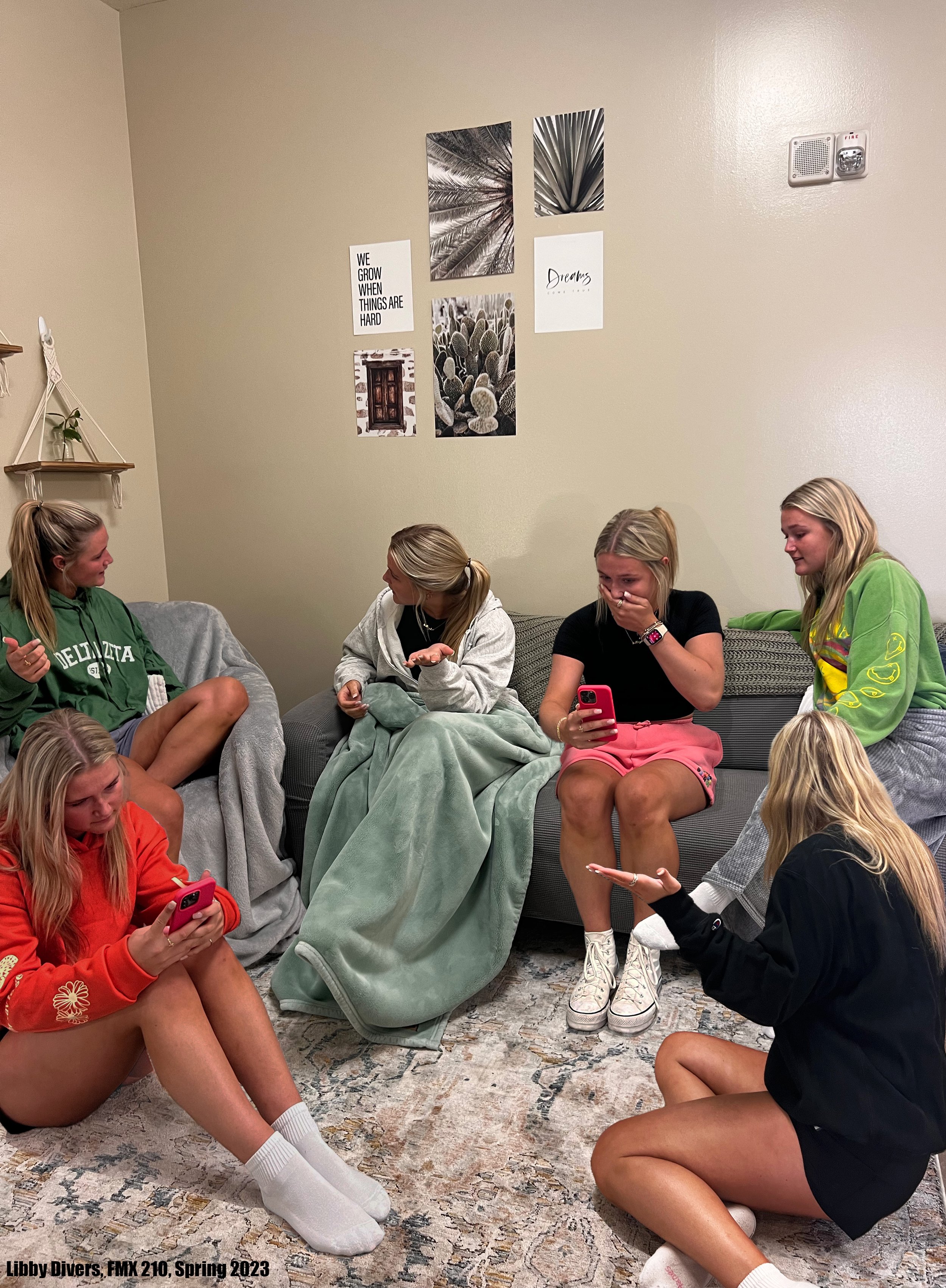
Girls’ Night is a digital media project that explores the concept of Multiplicity: capturing a single subject in multiple poses within the same environment to create a single, cohesive narrative. By meticulously combining six distinct self-portraits, I transformed a solitary space into a lively, dramatic girls' night scene, focusing on the technical challenges of maintaining consistent lighting and spatial interaction.
Project Specifications
Role: Lead Photographer & Digital Editor
Context: FMX 210: Digital Media | University of Tampa
Tech Stack: Adobe Photoshop, Adobe Illustrator, MacBook Air
Scope: 6-frame composite | High-resolution narrative photography
Girls’ Night
The Vision: A Social Story In One Shot
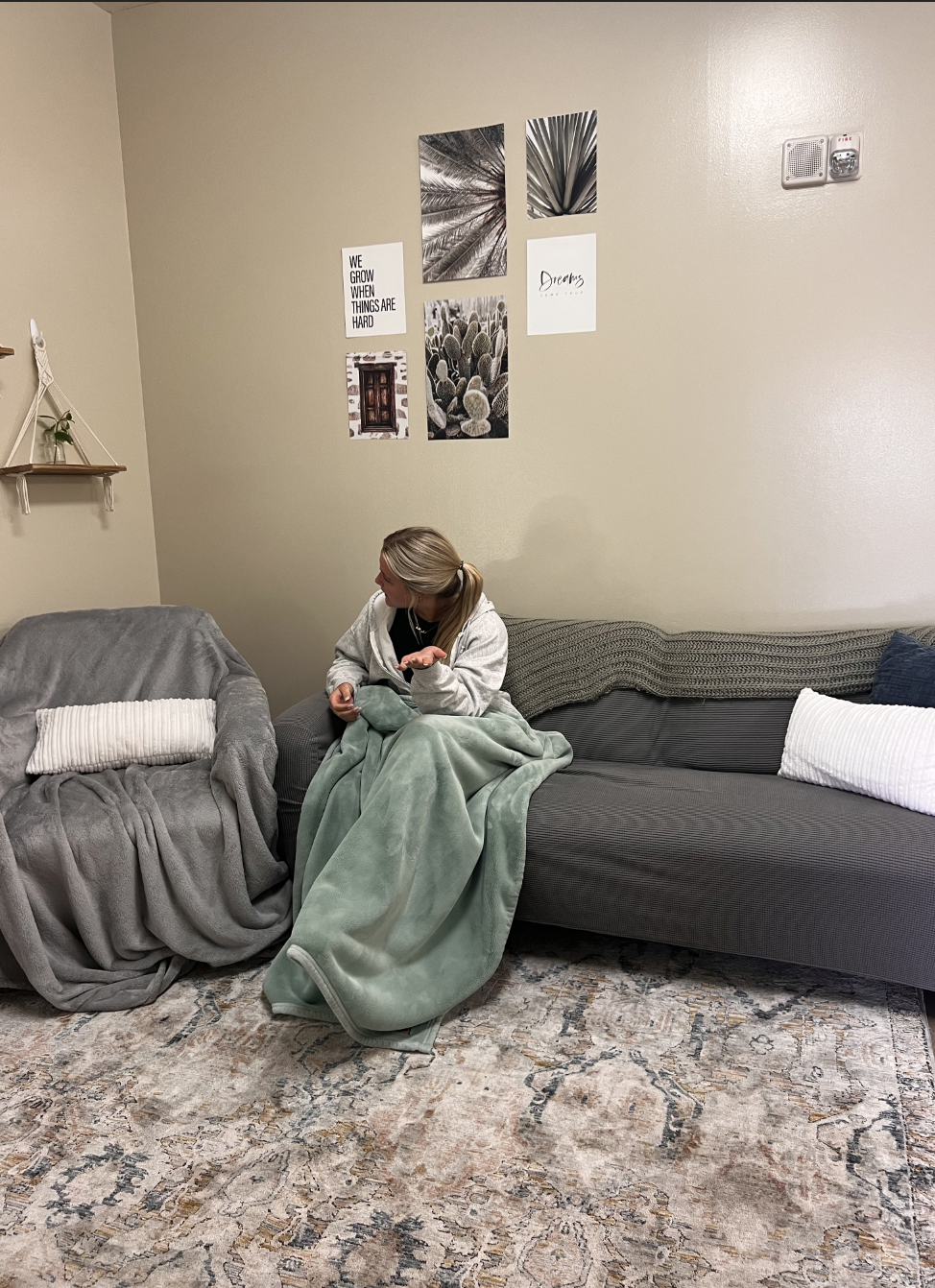
The goal of this assignment was to tell a believable story through the interactions of multiple versions of myself. I chose to re-enact a casual girls’ night, complete with humor and drama. The challenge was not just in the photography, but in ensuring that the six characters, six different photographed versions of myself, occupied the space naturally, with overlapping movements and shared lighting that would convince the viewer the shot was captured in a single moment.
Key Design Objectives:
Narrative Cohesion: Directing six different characters to ensure their poses and expressions told a unified story of a social gathering.
Technical Realism: Mastering the invisible edit by ensuring that skin tones, shadows, and light sources remained identical across all six instances.
Spatial Interaction: Carefully managing overlaps to ensure characters appeared to be standing in front of or behind one another without digital artifacts.
The Process: Mastering The Composite
Creating a seamless multiplicity image requires a high level of attention to detail during both the shooting and editing phases:
Fixed-Frame Photography: I captured six images at the same location using a tripod to keep the background perfectly static, which is essential for a clean composite.
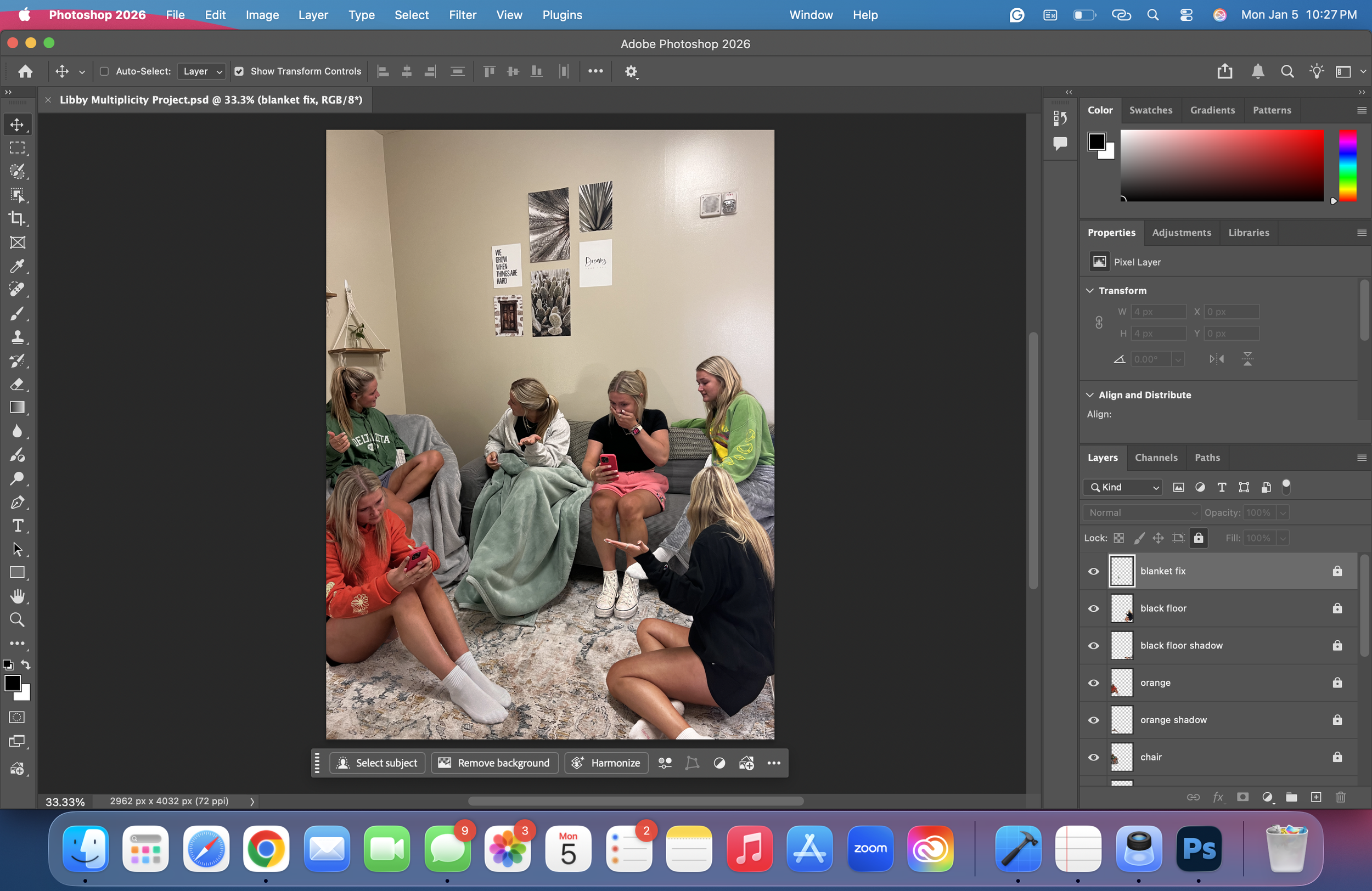
Advanced Masking in Photoshop: I utilized layer masks to paint each of my six selves into the master frame. This required precision around hair and clothing to prevent ghosting or hard edges.
Lighting & Shadow Reconstruction: Since light can shift slightly between shots, I manually adjusted levels and added contact shadows where my characters interacted with the furniture or each other to ground them in the 3D space.
Skin Tone Harmonization: I used color-grading tools to ensure skin tones remained consistent across the frame, regardless of how far each character was from the primary light source.
Reflection: What I Learned
This was one of my favorite assignments because it challenged my patience for technical work and my eye for detail. I really enjoyed the puzzle of making six different versions of myself look like they were truly in the same room together. It taught me that the most crucial part of digital editing is the unseen work, and that shadows and subtle lighting changes make a fake image feel real. I am incredibly proud of how I managed the skin tones and overlaps to create a professional final product.
Looking Ahead: Reality and Perception in HCI
Working on this multiplicity project gave me a deeper understanding of how the human eye perceives truth in a digital image, which has been incredibly helpful for my Honors Thesis research on visual attention. I am interested in how users scan a complex picture with multiple focal points compared to a simple one. In the future, I want to explore how these digital compositing skills can be applied to Augmented Reality (AR) to create virtual avatars that interact seamlessly with the real world, enhancing user engagement and storytelling.