
Translating the Collegiate Experience into Interactive Game Mechanics
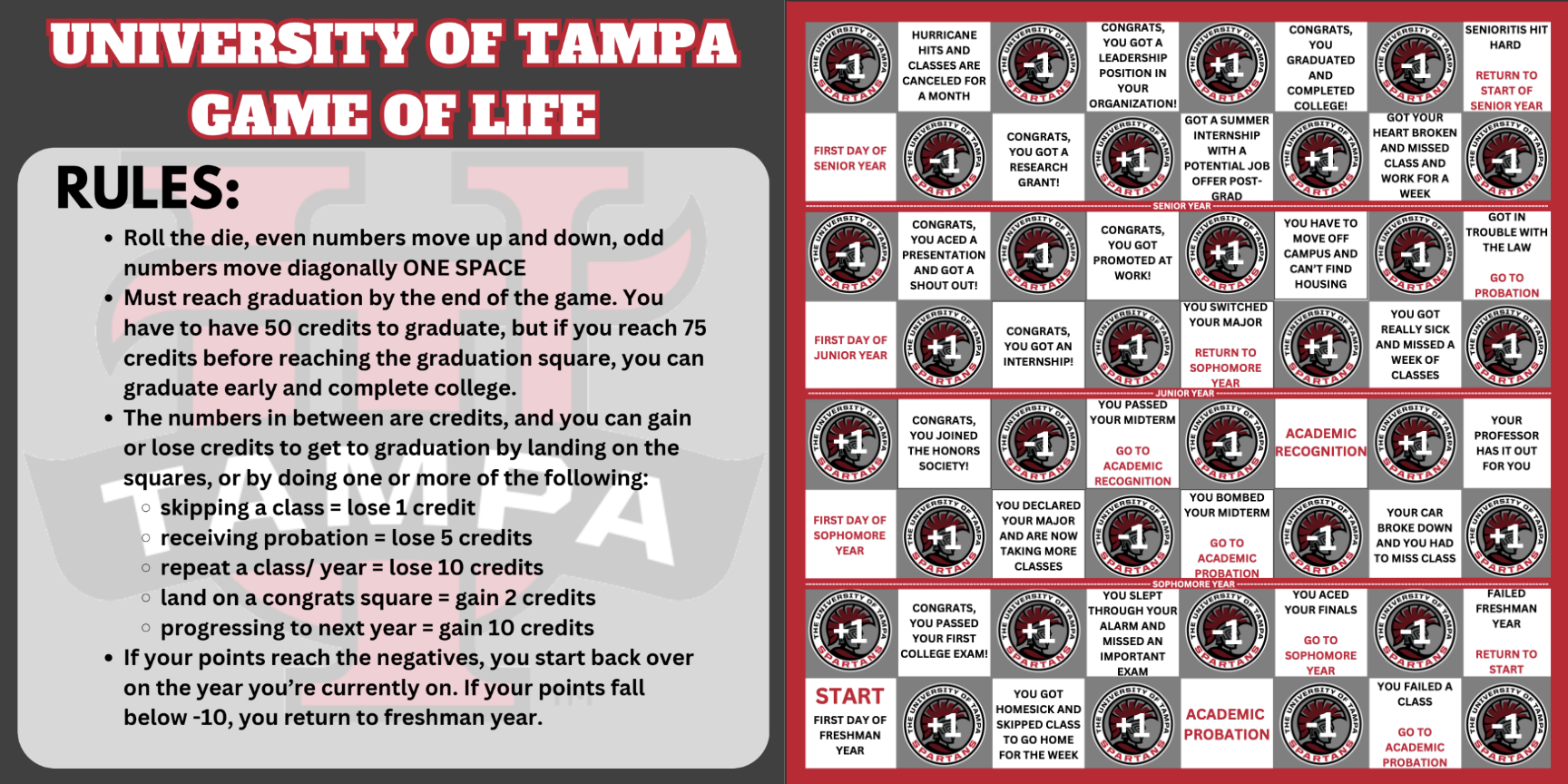
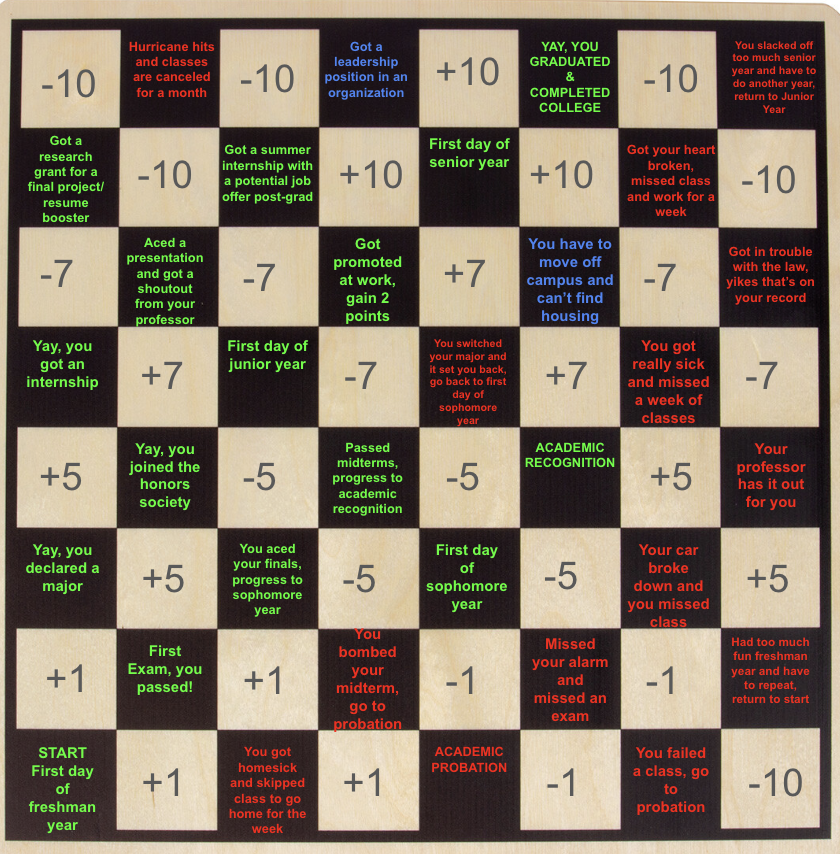
Game of UTampa is a tabletop adaptation of the classic Game of Life, specifically re-engineered to reflect the University of Tampa's unique cultural and academic environment. This project served as a deep dive into systems design, focusing on how rule sets and environmental storytelling shape the Player Experience.
Project Specifications
Role: Lead Game Designer & Visual Illustrator
Context: FMX 339: Game Design and Production | University of Tampa
Tech Stack: Google Slides, Adobe Acrobat, MacBook Air
Deliverables: Playable Board Game, Comprehensive Rulebook, Design Document
Game of UTampa
The Vision: Gamifying Student Life
The objective was to transform the abstract journey of The Game of Life into a localized, relatable experience for UTampa students. By utilizing the university’s official colors and logos, I established an immediate sense of place and recognition for the players, allowing them to navigate digital and physical milestones they encounter daily on campus.
Key Game Design Objectives:
Meaningful Choice: Designing branching paths that represent major life decisions, such as choosing a major or participating in specific campus leadership roles.
Balanced Mechanics: Ensuring the game remains competitive and fair for 3+ players through iterative playtesting of the economy and movement systems.
Emotional Resonance: Incorporating social events and UTampa-specific challenges to build a deeper connection between the player and the game world.

The Process: Designing For the Player Experience
This project required a meticulous approach to the game design loop, moving from concept to playability:
System Research: I analyzed existing versions of the Game of Life to identify which core loops (income, life events, winning conditions) would best translate to a collegiate setting.
Visual Branding: I leveraged my New Media background to integrate school-specific design elements, ensuring the board felt like an official extension of the UTampa brand.
Rule Development: I authored a clear, comprehensive rulebook focused on onboarding to ensure new players could understand the mechanics within minutes.
Iteration & Production: Using Adobe Acrobat, I finalized the high-resolution board and instruction pamphlets, ensuring that every physical element supported the overall fun factor and ease of play.
Reflection: What I Learned
This assignment was a great way to explore how mechanics drive emotion. I learned that game design is really about managing the player's experience from start to finish. It was challenging to balance the luck of the dice with strategy in the rules, but it taught me a lot about how people interact with systems. Reflecting on my own time at UTampa while building this made the creative process much more personal and rewarding.
Looking Ahead: Game Mechanics in UX
Working on a physical board game gave me a new perspective on Information Architecture and user flow. In my Honors Thesis research on eye-tracking, I am interested in how players scan a game board versus a digital screen to find the information they need most. In the future, I want to explore Gamification in HCI, examining how we can leverage these fun elements to enhance educational tools and health apps and keep users engaged and motivated.