
Spatial Computing and Immersive Environmental Design
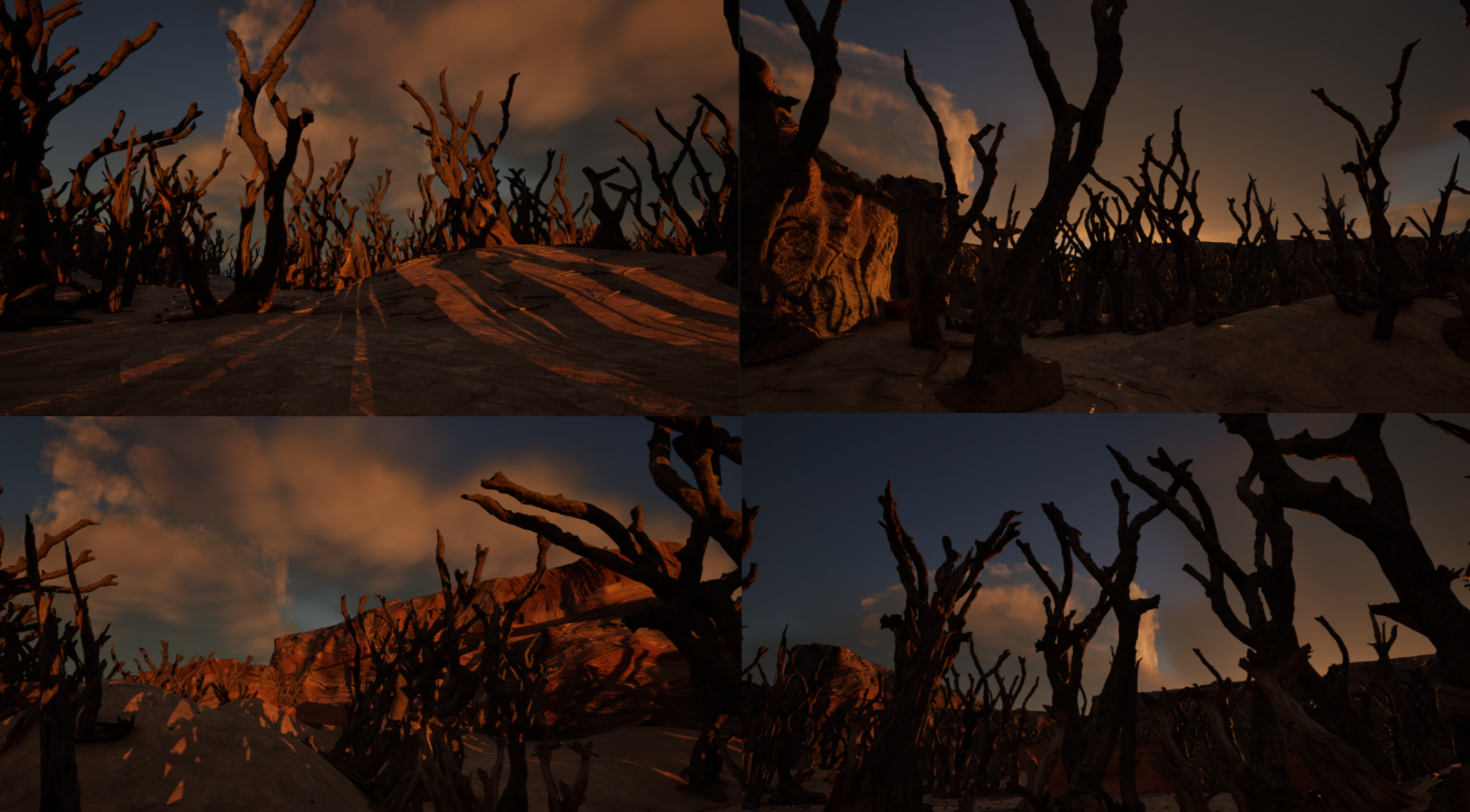
Desert Sunset is an interactive digital installation that pushes the boundaries of spatial computing to create a highly realistic, immersive environment. By leveraging Unreal Engine's advanced rendering capabilities, I developed a setting that immerses the player in a physical-feeling space through the strategic use of environmental effects and atmospheric lighting.
Project Specifications
Role: Lead Environmental Designer
Context: FMX 430: Spatial Computing | University of Tampa
Tech Stack: Unreal Engine, HP Desktop PC
Deliverable: Interactive Immersive Environment
Desert Sunset
The Vision: Immersive Realism
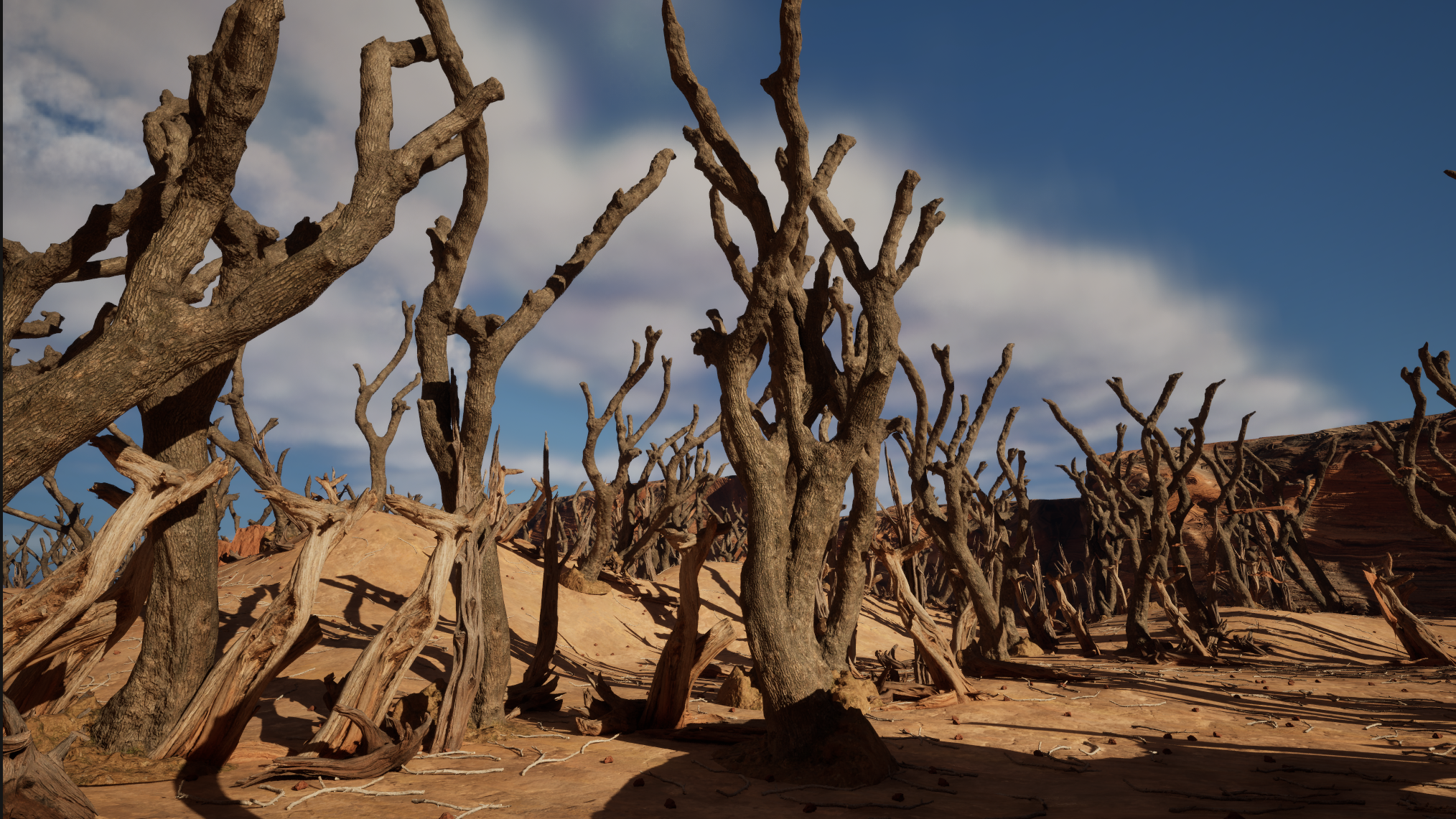
The goal of this project was to demonstrate advanced technical skills in Unreal Engine by expanding on a foundational immersive assignment. I aimed to create a forest-in-the-desert aesthetic, balancing the starkness of a desert landscape with detailed organic elements to maximize player immersion.
Key Design Objectives:
Terrain Expansion: Developing a vast, detailed terrain that encourages exploration and maintains visual fidelity at every scale.
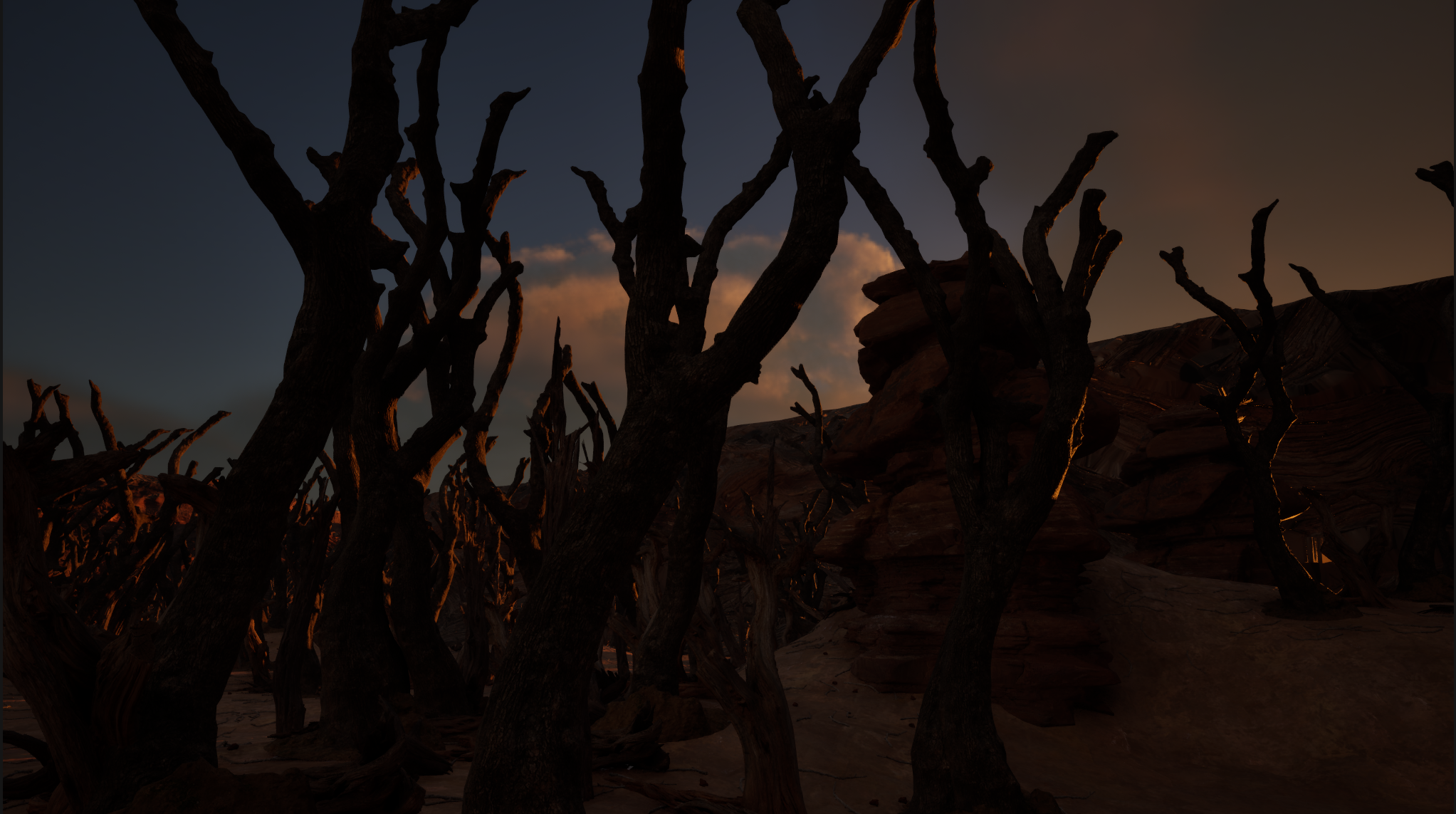
Atmospheric Lighting: Mastering sunset lighting effects to create a specific emotional mood and realistic shadows across the environment.
Environmental Texturing: Changing and refining textures to ensure the ground, rocks, and foliage felt tactile and grounded in a real-world setting.
The Process: Pushing Unreal Engine Boundaries
This project required a deep dive into the technical tools used for modern game development and spatial computing:
Asset Integration: I manually placed sticks, trees, logs, and rocks to populate the terrain, creating a complex ecosystem that feels lived-in and natural.
Lighting & Effects: I focused on the golden hour, adjusting global illumination and post-processing volumes to capture the distinctive orange and purple hues of a desert sunset.
Spatial Immersion: I used environmental effects to ensure that as the player moves through the space, lighting and foliage respond in a way that feels consistent and realistic.
Hardware Optimization: Developing on an HP Desktop enabled me to do more, apply more textures and edits beyond those in previous assignments, and test the limits of real-time rendering.
Reflection: What I Learned
This project was a major challenge for my software skills because Unreal Engine has such a steep learning curve. I really enjoyed the process of pushing myself to go beyond a basic landscape and adding those tiny details, like the placement of a log or the texture of a rock, that actually make a player feel like they are in that space. It taught me how much lighting can change the entire feel of a digital space and how important environmental storytelling is in spatial computing.
Looking Ahead: The Future of Spatial Interaction
My experience with Unreal Engine has given me a new perspective on my Honors Thesis research regarding how users process visual information. I am interested in how immersive 3D environments can be used in eye-tracking studies to determine whether users react differently to virtual spaces than to 2D screens. In the future, I want to explore Virtual Reality (VR) and AR within HCI, examining how we can leverage high-fidelity environments to create more effective training simulations or therapeutic tools. I believe that the future of UX is 3D, and I want to be at the forefront of designing those spaces.