

Figure 1: Example of a VR-integrated eye-tracking heatmap (Image source: IntoTheMinds, 2024).
Honors Thesis
Eye-Tracking for Enhanced User Engagement and Marketing Analytics
My Honors Thesis investigates the intersection of cognitive psychology and digital design by using eye-tracking technology to analyze real-time user behavior. The goal is to move beyond subjective user reports and capture objective data on how people process visual information, ultimately creating data-driven guidelines for more intuitive and accessible digital interfaces.
Project Specifications
Role: Lead Researcher
Context: Honors Thesis | University of Tampa
Timeline: Research & Execution Phase (Expected Completion: Spring 2026)
Methodology: Experimental Research Design, Quantitative Surveys, Eye-Tracking Testing
Tech Stack: Eye-tracking hardware, Advanced Data Analytics, Machine Learning Integration

Figure 2: An overview of the UX Research (Source: Rivas, 2024).
The Research Phase: Foundation & Survey Insights
I am currently in the executing phase of my research, which began with a Digital Interface Preference Survey to establish baseline user expectations before moving into the physical eye-tracking lab.
Key Survey Findings:
Visual Hierarchy: 80% of respondents agree that overall visual design significantly influences their decision to stay on a page and trust its content.
Content Consumption: 37% of users prefer layouts broken up by large visual elements (photos/videos), while 36% prefer distinct grids, indicating that visual anchors are more effective than long, continuous text.
Initial Attention: 69% of users focus on headlines first, but 56% are immediately captured by large hero banners, supporting the "Visual Hierarchy Model".
Accessibility: 51% of participants stated that poor readability due to font size or style would cause them to leave a site immediately.
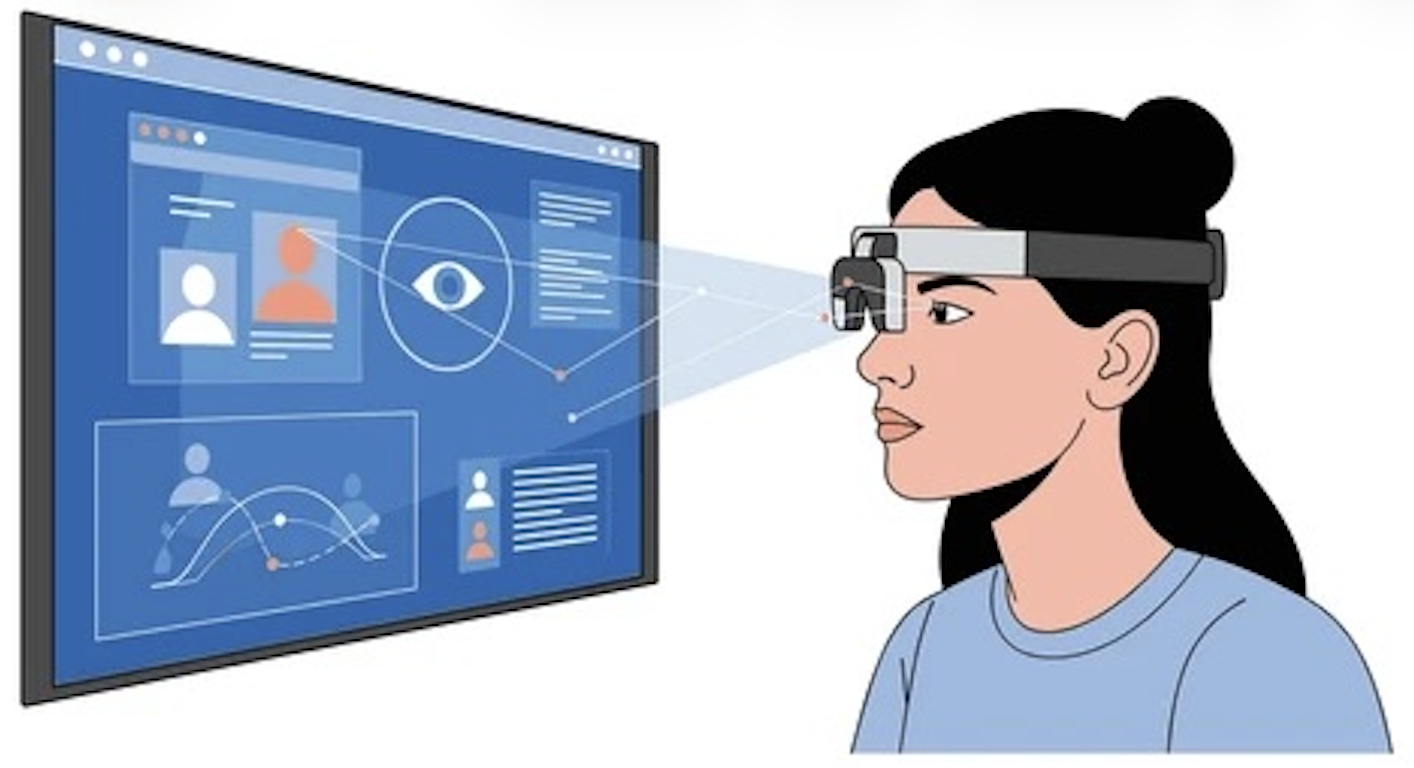
Figure 3: A conceptual diagram of advanced eye-tracking technology, illustrating how real-time gaze data can be leveraged to enhance user interaction (Source: Shutterstock, 2026)
The Process: Setting Up the Eye-Tracking Survey
Building on these survey results, I am now transitioning to the experimental phase:
Defining the Central Question: Investigating how real-time gaze data can optimize digital interfaces to improve user engagement.
Participant Recruitment: Setting up tests with a diverse sample of users to interact with advertisements, websites, and educational content.
Data Capture & Analytics: Utilizing eye-tracking hardware to record fixation points (where users look), dwelling time, and the sequence of visual scanning.
HCI Theory Application: Testing established principles like Fitts’s Law and Hick’s Law to see if objective gaze data aligns with theoretical predictions of interaction speed and ease.

Figure 4: A summary of key marketing insights derived from eye-tracking studies, illustrating common browsing patterns and user behaviors. (Source: Patel, 2026)
Next Steps: Analysis & Predictive Modeling
As I move into the final stages of the project, my focus will shift to:
Key Survey Findings:
Generating Visualization Tools: Creating heatmaps and gaze plots to offer clear, visual evidence of how different user groups process digital content.
Actionable Recommendations: Developing specific guidelines for marketing, web design, and education to reduce cognitive load for users.
Machine Learning Integration: Exploring how machine learning can use this gaze data to create predictive models for real-time personalization of digital experiences.
Reflection: Bridging The Gap
This project is the culmination of my interest in how humans and computers interact. While my survey showed me what people think they like, the eye-tracking phase will show me what their brains are actually doing. I have learned that good design is not a guessing game, but rather a science. Coordinating between survey data and lab testing has taught me how to manage a long-term research project and turn complex data into actionable insights that help designers build better, more inclusive tools.
Looking Ahead: The Future of UX Research
As I enter the final phases of this project, my immediate goal is to launch the formal eye-tracking study. I plan to run these tests in a controlled lab environment where I can record real-time gaze data from a diverse group of participants. Following the lab sessions, I will analyze the results alongside my initial survey data to determine how closely perceived user preferences align with actual visual attention. This research will culminate in a formal thesis paper and a presentation at the Honors student showcase, where I will share my findings on how specific design elements influence digital trust and engagement.
Once this initial research is complete, I am eager to pursue integrating Artificial Intelligence with eye-tracking technology. I am particularly interested in how machine learning can be trained on gaze datasets to create predictive UI that adapts to a user's attention in real-time. By combining what I've learned in my Computer Science minor with these HCI research methods, I want to develop AI-driven tools that make digital experiences more intuitive, personal, and accessible for users across all platforms.